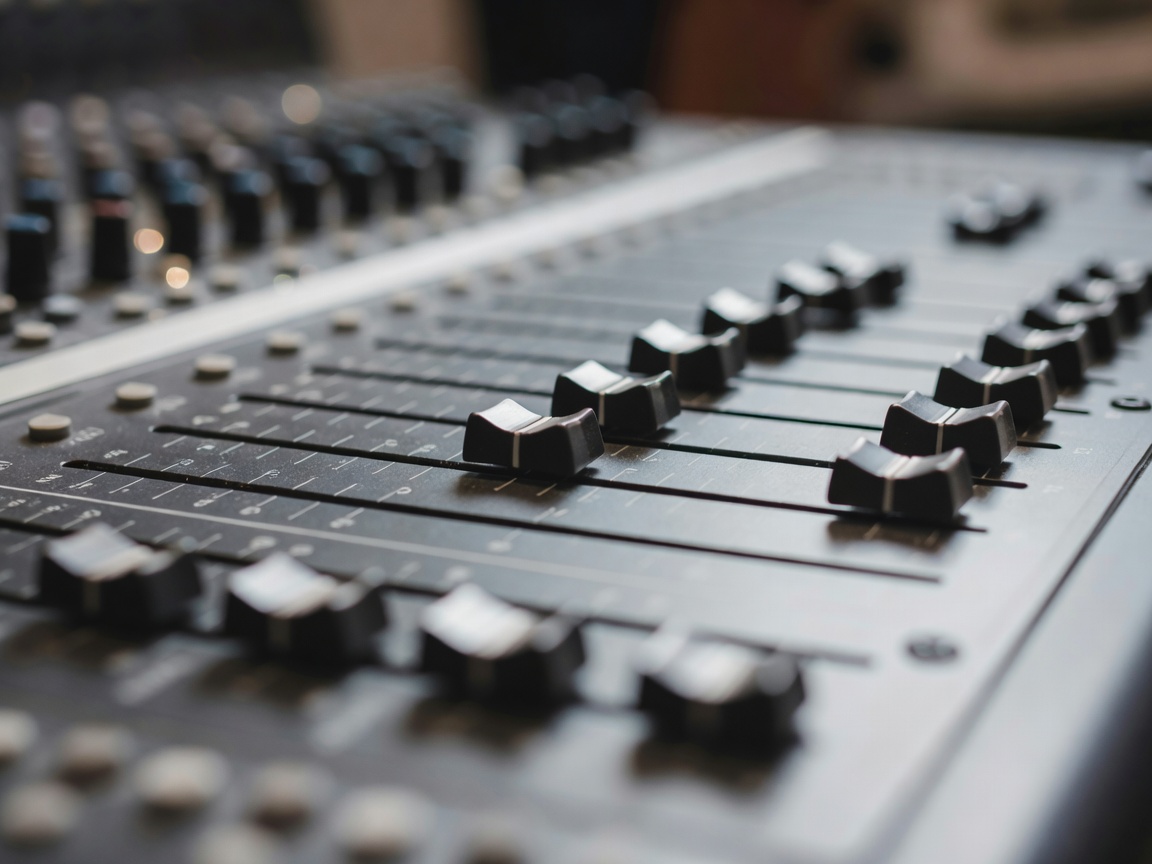
Foreground, middle ground, distance
A good mix has depth the way a photograph has focus. One element is sharp, others sit softly behind it, and the audience's attention lands exactly where the story needs it.
Randy Thom, long associated with Skywalker Sound, argued in his essay "Designing a Movie for Sound" that the best soundtracks are planned from the script stage, with scenes written to leave room for sound to tell part of the story. Whether or not you had that luxury, the mix is where you decide which layer leads at each moment.
Three tools create depth: level, frequency and space. Louder, brighter and drier sounds feel close; quieter, duller and more reverberant sounds feel distant. A distant siren is not just quieter — it has lost its high frequencies and gained the sound of the city around it. Imitate that, and your mix will feel three-dimensional even in stereo.
Ben Burtt's work on Star Wars is often cited for its inventive effects, but its real lesson for mixers is restraint: memorable sounds were given space to be heard, rather than competing in a constant wall of noise.
Organise the session before you mix it
- DDialogueAll production dialogue, ADR and group voices, routed to one dialogue bus.Annotation: mix this stem first, to a consistent level.
- MMusicScore and source music, with source cues treated to sound like they come from inside the scene.Annotation: automate dips around key lines.
- EEffectsFoley, hard effects, backgrounds and designed sound, often sub-grouped.Annotation: keep Foley and backgrounds on separate sub-buses for control.
Delivering separate D, M and E stems lets distributors create foreign-language versions and trailers without remixing from scratch — a common requirement in delivery specifications.
Carrying the audience across the cut
- J-cut / pre-lapSound from the next scene begins before the picture changes. It creates anticipation and momentum — the train whistle that arrives a second before we see the station.
- L-cutSound from the current scene continues over the next shot. It lets an emotion or a line finish, and keeps reaction shots connected to what provoked them.
- Sound bridgeA single sound or music cue that spans several shots or locations, binding a montage or a time jump into one experience.
- Match cut in soundOne sound transforms into a similar one — a scream into a whistle, a heartbeat into a door knock. Used sparingly, it is unforgettable.
- Hard cut to silenceDropping the whole soundtrack at a cut. Powerful because it is rare; the audience leans in.
Delivery standards worth knowing
Always confirm against the current specification supplied by your distributor; these figures are commonly published references.
| Context | Standard or guidance | Target | Note |
|---|---|---|---|
| European broadcast | EBU R 128 | −23 LUFS integrated | Measured per ITU-R BS.1770 |
| US broadcast | ATSC A/85 | −24 LKFS integrated | LKFS and LUFS are equivalent units |
| Netflix originals | Netflix sound mix specifications | −27 LKFS dialogue-gated, ±2 LU | Dialogue-based measurement |
| Cinema | Calibrated playback level | No integrated loudness target | Mixed in a calibrated room; dynamics preserved |
| Web and social video | Platform normalisation | Varies by platform | Loud mixes are turned down; prioritise clarity |
One transition, two choices
A funeral scene cuts straight to a busy market. Both scenes' sounds start and stop exactly on the cut. The change is jarring in a way the story did not intend.
The quiet church tone lingers half a second into the market shot (an L-cut), then the market rises gradually. A single bell from the church is answered by a bicycle bell. The audience feels the character's grief following them into ordinary life.
A mixing checklist
Work through these before you export. Then sleep on it and listen once more with fresh ears.
Ask the sound desk- Calibrate your listening levelMix at a consistent, moderate level so judgements stay comparable.
- Check every cut for continuityNo backgrounds dropping, no unexplained changes in room.
- Watch once for each layerDialogue only, then effects, then music — then everything.
- Test on three systemsStudio monitors, headphones and a phone speaker.
- Measure loudness and true peakMeet the spec; keep true peak within the stated ceiling.
- Export stems and a mixLabel clearly with project, version and date.